A bungalow entrance has to manage forced-entry risk, monsoon water, dust, heat, ventilation, privacy and everyday movement at the same time. By comparing the door’s role, construction, opening conditions and installation details, you can decide whether a French door, an outer safety door or a coordinated two-door entry suits your home.
Key takeaways
- Prioritise forced-entry resistance, rain protection and daily durability before appearance.
- Choose French doors for daylight and width only after checking locks, hinges and glass.
- Measure the structural opening, threshold and sill before ordering any bungalow entry door.
- Specify the frame, hardware, glazing, drainage and finish as one complete entry system.
Start by defining what the entrance must do
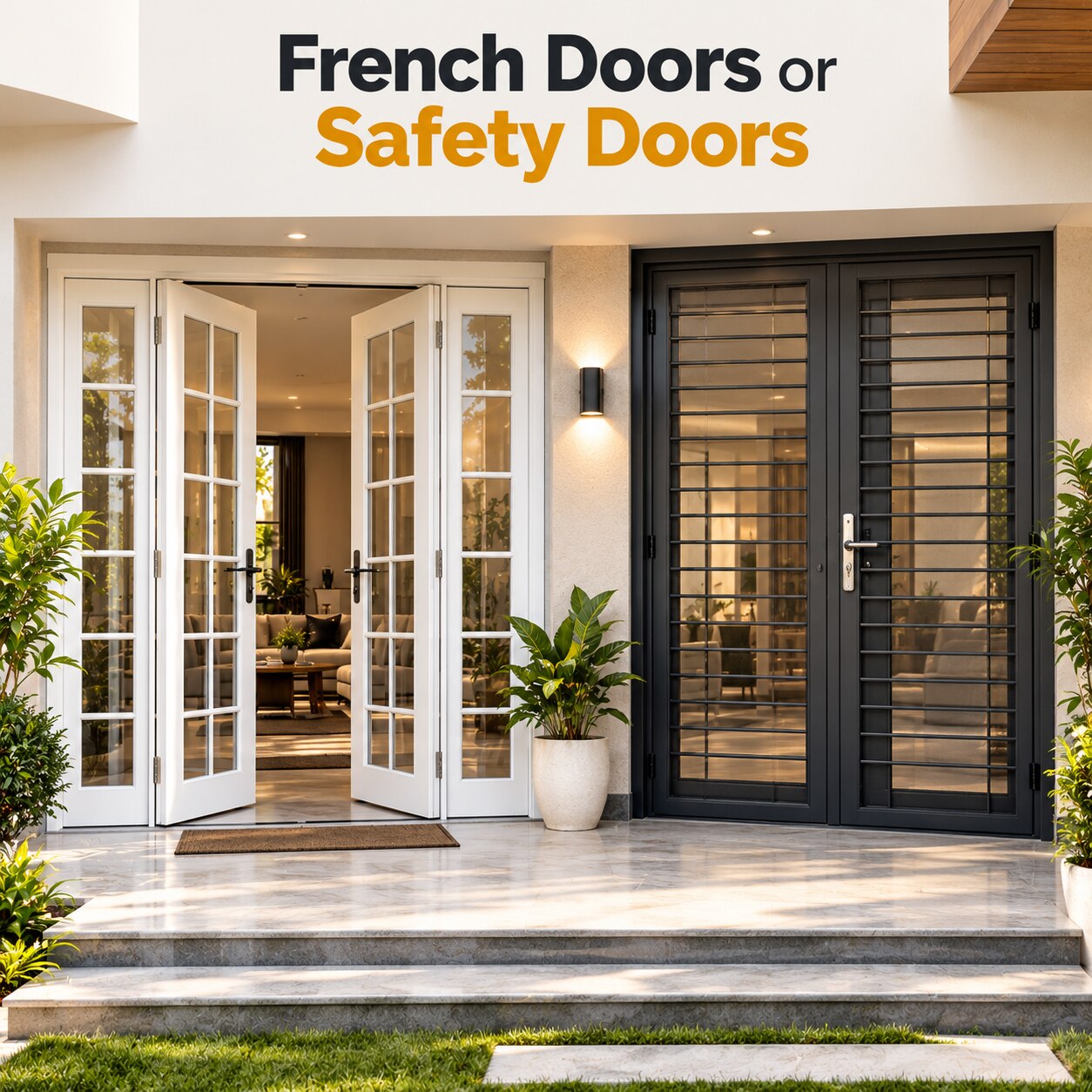
Your entrance must first resist forced entry, rain and daily wear; appearance comes after those jobs. Choose a primary French door when daylight, ventilation and a wider opening matter, and choose a safety door when security, privacy and simple maintenance are the actual problem.
| Option | Main strength | Main risk or limitation |
|---|---|---|
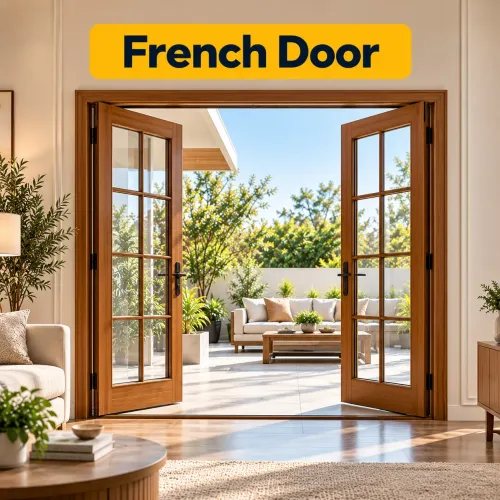
| French doors | Daylight, cross-ventilation and a welcoming wide opening | Two leaves, the meeting stile, extra hinges, glass and seals create more points to align, lock and maintain |
| Safety door outside another door | Security grille, airflow and visibility outside; inner door adds weather sealing and privacy | Requires coordinated swing clearance, two usable locking lines and enough space between doors |
| Single solid or glazed security leaf | Simplest frame, threshold and locking arrangement | Less open appearance and less cross-ventilation |
For safety doors for a bungalow in Nashik, inspect the opening rather than trusting the proposed leaf size. A strong shutter still fails if its frame is anchored only to plaster or loose masonry.
Confirm multiple mechanical fixings into sound RCC, brick or blockwork, and measure the finished opening at several heights for square, sill level, wall depth and hidden conduits.
Nashik monsoon conditions also make the threshold part of security: specify an outward fall, raised sill, drip or weather bar, and sealed frame-to-wall joints without creating a trip edge.
If you choose French doors, use laminated security glass, reinforced frames, multi-point locking and anti-lift protection; ordinary glass can let an intruder reach the handle after breaking it.
Compare security, light, air and weather protection
A French door wins on daylight, air movement and entry width; a safety door wins on simpler locking, sealing and daily control. For safety doors for bungalows in Nashik, the practical arrangement is a steel grille outside a timber, uPVC or aluminium door.
| Option | Security | Light and air | Weather and privacy |
|---|---|---|---|
| French door | Two leaves create a vulnerable meeting stile, extra hinges and more glass. Use laminated or toughened glass, a multi-point lock, hinge bolts or protected hinges, and flush bolts at the top and bottom of the inactive leaf. | Opens a wide clear area and supports cross-ventilation. Keep grille spacing and low handles safe from reaching hands. | Seals depend on accurate alignment at the centre joint and threshold. Rain, dust and noise expose poor gaps quickly; glass also reduces privacy unless obscured. |
| Safety door outside an inner door | The steel grille adds a separate locking line and visibility control. The inner door handles weather sealing and privacy, while the grille resists casual intrusion. | The grille passes air and preserves some visibility, but the inner door must remain open for full ventilation and daylight. | The inner door blocks rain and dust better than a grille. Coordinate both swing paths so one door cannot trap or obstruct the other. |
A strong shutter cannot rescue a frame fixed only into plaster or loose masonry. Anchor the frame into sound RCC, brick or blockwork, then check both doors after flooring, plaster and threshold work are complete; small alignment errors cause rubbing, lock failure and leaking seals.
Check the failure points before choosing a French door
The meeting stile is the first place to test: a central lock on the active leaf does not secure the inactive leaf. These are the main french door security concerns in nashik, especially where the entrance faces heavy rain, dust and repeated daily use.
| Failure point | French door specification | Safety door comparison |
|---|---|---|
| Meeting stile | Top and bottom flush bolts or surface bolts on the inactive leaf, engaging a reinforced head and threshold | One solid leaf removes the vulnerable central joint |
| Lock area | Reinforced lock stile, multi-point lock, strong strike plates and a cylinder guard against snapping or drilling | A deadbolt and grille lock are simpler to inspect and maintain |
| Glass | Laminated security glass where forced-entry resistance matters; toughened glass mainly reduces impact injury | Steel bars or mesh prevent hand access; spacing must not allow reaching the inner handle |
| Frame and hinges | Concealed or security hinges, hinge-side protection and a frame anchored into sound masonry or RCC | A steel frame still fails if fixed only into plaster or loose brickwork |
| Threshold | A sealed, firmly supported threshold with no pryable gap | The outer grille needs clearance while the inner door supplies weather sealing |
Specify the fixing pattern before fabrication. Require multiple mechanical anchors into sound brick, blockwork or RCC, not just packed cavity or plaster. Ask for keep points screwed into the frame, and check that the inactive-leaf bolts cannot be reached through a gap.
A solid safety leaf is easier to align, seal and lock. Choose French doors when daylight and width justify the extra hinges, seals, glass and central joint.
Measure the opening and solve Nashik site conditions
Measure the finished opening, not the nominal door size, before approving fabrication. A manufactured frame needs the actual width, height, squareness, plumb and fixing depth to avoid water entry, rubbing or weak anchors.
- Record width at the top, middle and sill, plus height at both jambs and the centre.
- Measure both diagonals; unequal diagonals confirm a non-square opening.
- Check jambs with a level, and note uneven sill heights, plaster thickness and the clear reveal depth.
- Locate concealed electrical conduits before drilling.
- Identify whether the fixing surface is sound RCC, brick or blockwork rather than plaster, loose masonry or an unfilled cavity.
- Agree the anchor positions before the frame is manufactured.
These checks address common bungalow entry door problems in Nashik, where a strong shutter can still fail because its frame is poorly supported. Fix the frame mechanically at multiple points into sound structure, then pack irregular gaps solidly instead of tightening anchors against empty space.
Keep monsoon water outside with a sill raised enough to resist wind-driven rain, an outward floor fall, a drip or weather bar, and sealed frame-to-wall joints. Do not rely on sealant alone, and keep the sill low enough to avoid a trip hazard.
Check the complete swing path after measuring. An outer safety door and inner door need clearance so their handles, hinges and leaves cannot collide or trap one another. Allow space for the inactive French-door leaf and its top and bottom bolts to engage the reinforced head and threshold.
Choose the configuration and specify the complete entry system
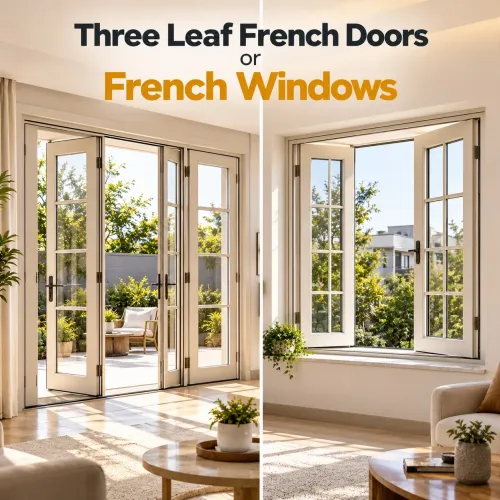
Choose two leaves when you need a normal entry width and want daylight without the alignment demands of a wider assembly. Choose three leaves when the opening is wide but daily access needs one active leaf; choose four when you need the broadest opening for furniture, vehicles, or a strong visual connection to a verandah.
| Option | What it means | When it applies |
|---|---|---|
| Two leaves | One active and one inactive leaf | Standard bungalow entry with occasional wide access |
| Three leaves | One regular leaf plus two opening leaves | Wide opening where daily traffic uses a single leaf |
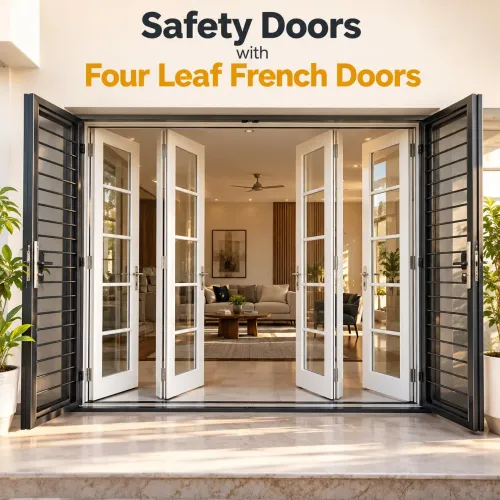
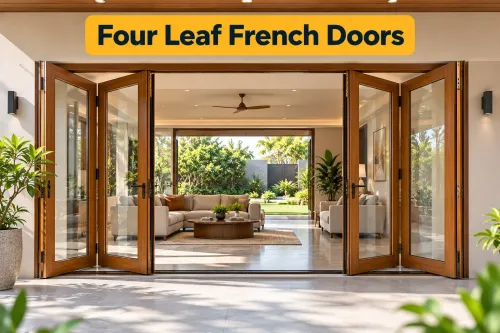
| Four leaves | Two pairs meeting at the centre | Very wide frontage where maximum clear opening matters |
For safety doors for bungalows in Nashik, pair a steel outer grille with the existing timber, uPVC, or aluminium door. Let the outer door provide ventilation and visibility; let the inner door provide privacy, rain sealing, and the second locking line.
Set both swing paths so an open leaf cannot trap the other, and confirm handle clearance before fabrication.
The inactive French-door leaf needs top and bottom bolts engaging reinforced head and threshold points. Anchor the frame into sound RCC, brick, or blockwork, not plaster. Ask Infinity French Doors to show the fixing pattern, threshold detail, and swing plan on the drawing.
This is the practical test behind French doors safety doors for bungalow in Nashik: the opening must be secured as carefully as the leaves.
Related products
 | Create your dream home with an Infinity French Door Our doors are * Eco Friendly * Anti - Corrosive * Cost Effective * Maintenance Free * Fire... View product → |
 | Three Leaf French Doors View product → |
Frequently asked questions
Should a Nashik bungalow use French doors or a safety door?
Choose French doors when daylight, ventilation and a wider opening matter. Choose a safety door when security, privacy and simple maintenance come first.
What security concerns should you check on French doors in Nashik?
Check the lock points, hinge protection, glass position, frame anchoring and the gap between the door leaves before choosing French doors.
How do you measure a bungalow entry opening in Nashik?
Measure the width and height at several points, check diagonals, record the threshold height and inspect the sill, plaster and surrounding structure.
What should a complete bungalow entry door system include?
Specify the door configuration, frame, locks, hinges, glazing or grille, weather seals, threshold, drainage, finish and installation tolerances together.
Related product
 | Four Leaf French Doors View product → |
Keywords